We built this because we were the customer.
Solaris started with a simple frustration: AI keeps promising to work for you, but it can't remember what you told it last week — and half of what it does remember stopped being true months ago. We ran into that wall running our own companies. So we built the system that fixes it, and we run on it ourselves.
The formal name is a mouthful on purpose — it's the precise description of what an intelligent operating system is underneath. Day to day, it's just Solaris: the system that knows you.
Why AI still doesn't know you.
The problem is structural
Every AI tool keeps its own partial memory of you — a note here, a preference there, a summary written months ago. Nothing connects them, and nothing retires them when your life moves on.
These aren't bugs. Memory features were bolted onto chat tools one at a time. What's missing is the thing underneath: a system that knows which version of a fact is current.
Forgetting is only half of it
The obvious failure is amnesia — re-briefing your AI every session. The dangerous failure is the opposite: it latches onto stale memories and answers from them with total confidence.
An assistant quoting your old prices, your abandoned plan, your former role — that's worse than one that knows nothing, because you won't always catch it.
Why now
AI models are past the capability threshold for most knowledge work. The gap between what AI could do for you and what it actually does is no longer intelligence — it's context.
The people who put their context into one governed system now will compound that advantage with every model release. Everyone else re-briefs a stranger, forever.
What we're building
Solaris is an operating system for your AI: your data, context, knowledge, tools, agents, workflows, reasoning, and governance in one system everything flows from.
Today we build it hands-on, one engagement at a time — and every engagement sharpens the system. It knows you not as a feature, but as a result.
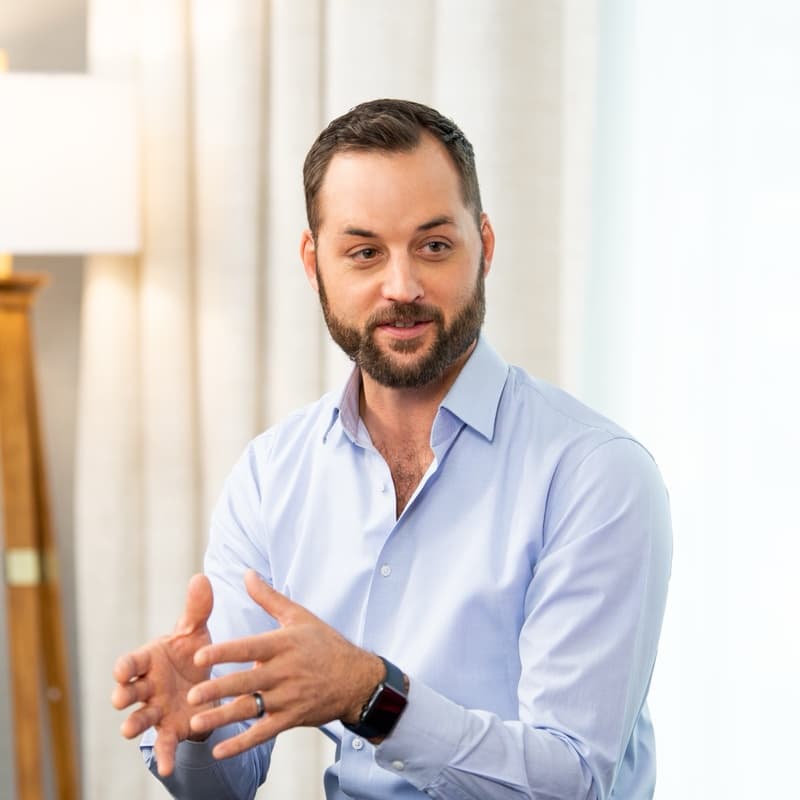
Eric Kornacki
I started Solaris because I was living the problem. As Chief Product Officer at Switch, a healthcare staffing marketplace, I scaled weekly operations from 3,000 to 17,000 hours across five states — and watched every hard problem trace back to the same root: context that lived outside the systems. Credentialing data that meant different things in different tools. Compliance truth scattered across five states' rules. AI pilots that demoed brilliantly, then forgot everything that mattered.
Before tech, I spent fifteen years getting people and systems that don't speak the same language to agree on what's true. I co-founded Re:Vision, a food-justice nonprofit that grew to a $3M annual budget and built the country's largest urban-agriculture and promotora program — 2,000+ backyard gardens, nearly a million pounds of food. I led the entitlement campaign that unstuck one of Denver's largest urban infill developments after a decade of stalled progress, and raised $4M for the Ute Mountain Ute Tribe to build a tribally-owned grocery store. Different worlds, same job: alignment among parties holding different versions of reality.
The technical throughline is the same one — AWS, PostgreSQL, data pipelines, and shipping AI into production workflows where wrong answers have consequences. The gap between what systems store and what's actually true is the root cause of most operational dysfunction — and now of most AI disappointment. Solaris is the system that closes it.
Get a system that knows you.
Tell us how you work and what you want AI to take off your plate. If it's a fit, we build your OS with you — hands-on, not hands-off.
Apply →